Network Security
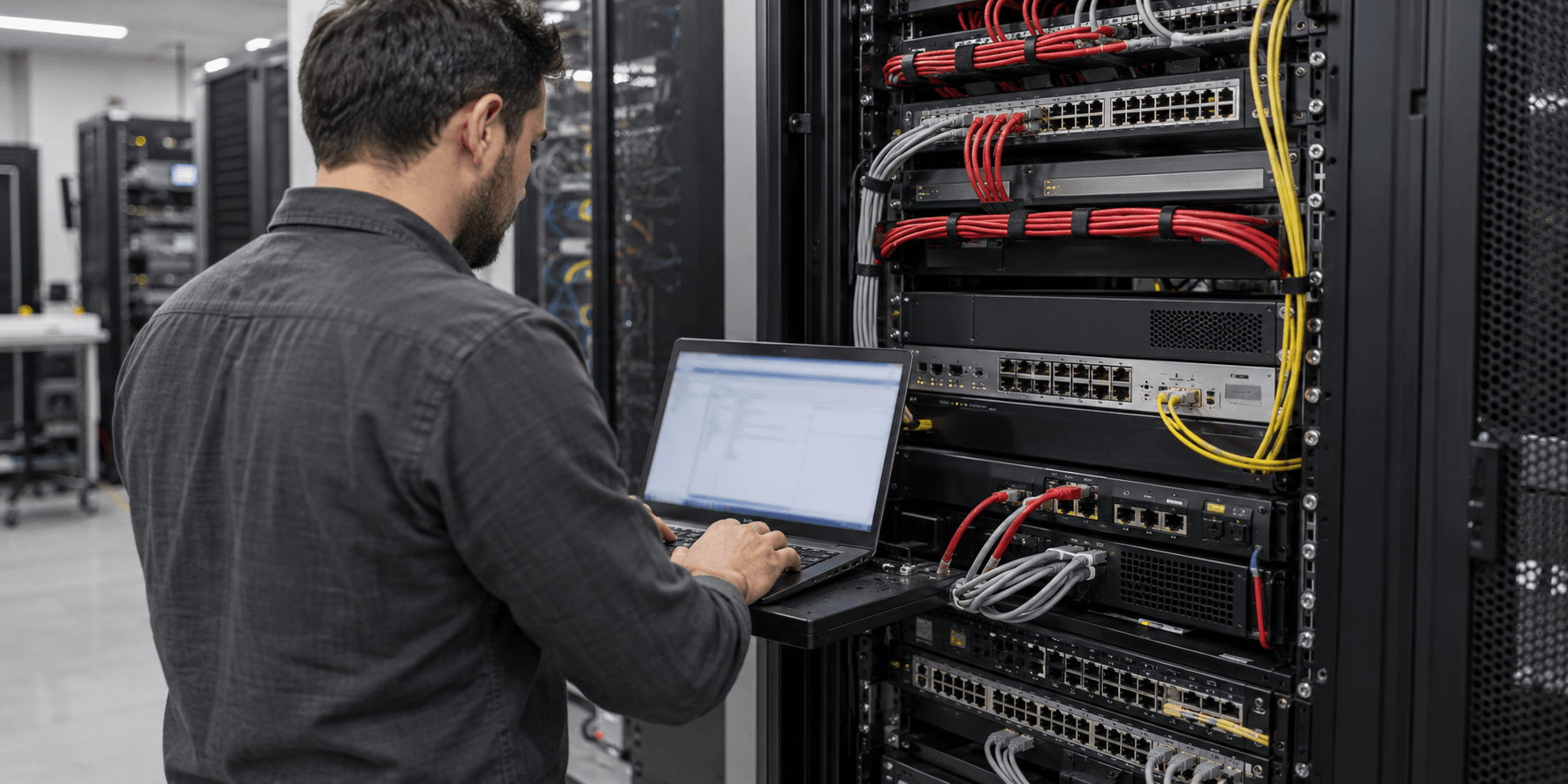
As technology rapidly advances, threats are also increasing at a fast pace. Network security is a set of measures and solutions necessary to protect digital data from unauthorized access, viruses, and malware.
This includes:
- Firewall and antivirus systems
- VPN and encryption protocols
- Continuous monitoring and threat intelligence
- User authentication and access control
Technofusion provides a complete security approach tailored to your company's specific needs.
What advantages does network security provide?
A well-planned network security system provides the following benefits:
✅ Protects data confidentiality – prevents critical documents from falling into the hands of unauthorized parties ✅ Ensures operational continuity – the system remains resilient against attacks ✅ Prevents cyber threats – detects and neutralizes dangers in real-time ✅ Protects the reputation of the enterprise – creates trust in terms of security with customers and partners
What Are the Main Network Security Threats?
Network security threats can arise from external cyberattacks or vulnerabilities within internal systems. These threats may lead to data theft, system disruptions, and interruptions to daily business operations.
The main threats affecting networks include:
Malware: Viruses, Trojans, and other malicious software can infect devices, steal information, and disrupt system operations.
Phishing attacks: Fraudulent emails and websites can be used to obtain login credentials and other confidential information.
Unauthorized access: Weak passwords and improperly configured access permissions increase the risk of unauthorized users accessing network resources.
Ransomware attacks: This type of malware encrypts files, restricts access to data, and may demand payment for recovery.
DDoS attacks: Overloading networks and servers with excessive traffic can disrupt the availability of services.
To reduce these risks, businesses should regularly update software, restrict access permissions, and monitor network activity. Security measures should be selected according to existing risks and reviewed periodically.
How Is Network Security Ensured?
Ensuring network security requires more than installing a single security application. Effective protection involves securing network devices, user accounts, data transmission, and software systems. Implementing appropriate security technologies helps prevent potential attacks and identify suspicious activities.
The Role of Firewalls, Antivirus Software, and VPNs
A firewall monitors incoming and outgoing network traffic according to predefined security rules. Its main purpose is to restrict unauthorized connections and control access to network resources.
Antivirus software is designed to detect, block, and, where possible, remove malicious programs from computers and other devices. Regular security checks are particularly important in corporate environments where multiple devices share the same network.
VPN technology creates an encrypted connection for data transmitted over the internet. This solution helps remote employees securely access internal company resources.
For more advanced security control in corporate environments, next-generation firewall systems can also be implemented. These technologies combine traffic filtering with application-level inspection and the detection of certain cyberthreats.
Network Monitoring and Access Control
Continuous monitoring of network activity helps businesses identify security issues in a timely manner. Monitoring tools can detect unusual traffic patterns, track device activity, and identify suspicious connections.
Access control ensures that users can only access information and systems according to their assigned permissions. Strong passwords, multi-factor authentication, and properly managed user privileges are essential for this process.
Businesses can use a network management system to centralize these processes. Such systems help monitor network equipment, identify technical issues, and simplify network administration.
How Can Wireless Network Security Be Protected?
Wireless networks, commonly known as Wi-Fi connections, are widely used in offices, homes, and public spaces. Although this technology allows devices to connect to the internet and internal network resources without cables, poorly secured connections can create risks of unauthorized access and data breaches.
Wireless network security includes measures designed to protect Wi-Fi connections, manage connected devices, and ensure secure data transmission.
The following steps are important for protecting a Wi-Fi network:
Strong passwords and encryption: Use passwords that are difficult to guess and enable WPA3 where supported. WPA2-AES can be used when compatibility with existing devices is required.
Router firmware updates: Updates provided by the manufacturer help address security vulnerabilities and improve device stability.
Administrator account protection: Change the router's default administrator password and restrict access to its management interface.
Guest network separation: In offices and other corporate environments, creating a separate Wi-Fi network for guests reduces the risk of unauthorized access to internal resources.
Firewall configuration: Properly configure the router's security features and restrict unnecessary external connections.
Businesses should also monitor connected devices and manage wireless network access centrally. These measures help strengthen network security and protect corporate information.
Computer and Corporate Network Security
Computer security focuses on protecting connected devices, operating systems, and stored information against various cyberthreats. Security vulnerabilities on an employee's computer may affect not only that device but also other resources connected to the same network.
The following measures are important for protecting computers:
Use antivirus and other endpoint security software;
Regularly update operating systems and applications;
Use strong passwords and multi-factor authentication;
Keep firewall protection enabled;
Regularly back up important data;
Avoid opening suspicious files and links from unknown sources.
Corporate network security involves a broader approach than protecting individual computers. Servers, employee devices, network equipment, and user accounts should be managed according to a unified security policy.
Network segmentation, restricted user permissions, and controlled access to internal systems play an important role in this process. Dividing networks into separate segments helps regulate connections between departments and device groups, limiting the spread of potential threats to other systems.
The effectiveness of security measures also depends on the network's technical architecture. When building a network infrastructure that meets a company's needs, equipment compatibility, connection stability, and security requirements should be considered together.
How Can Companies Strengthen Network Security?
Improving network security begins with assessing the existing infrastructure. Businesses should review their servers, routers, firewall systems, wireless connections, and user access permissions to identify potential security vulnerabilities.
Based on the identified risks, appropriate technical and organizational measures can be planned. These may include software updates, secure remote connections, revised access permissions, and improved network monitoring.
Employee cybersecurity awareness is also important for businesses. Phishing messages, weak passwords, and opening suspicious files can affect the effectiveness of technical security measures.
Network security is not a one-time task. The addition of new devices, software changes, and evolving cyberthreats require businesses to regularly review their security measures.
Technofusion provides network infrastructure and cybersecurity solutions tailored to companies' technical needs. Contact the Technofusion team to assess your current network security, identify potential risks, and plan suitable protection measures.